

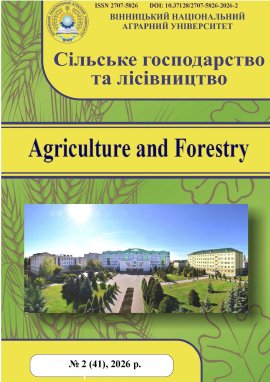
Issue №: 2 (41)
This issue of the journal is dedicated to current issues in improving technological methods for crop cultivation. Significant attention is given to the specifics of growing vegetable, grain and leguminous crops, which play a vital role in ensuring the state's food security. The scientific publications present the results of experimental research on the production of organic leguminous products, the importance of adaptive breeding to increase the resilience of agrocenoses, plant protection against harmful objects and the application of fertilizers to increase crop yields. Certain papers are devoted to the implementation of innovative methods for stimulating the seed productivity of forest seed plantations.
THE CURRENT STATE AND PROSPECTS OF HIGH-LYSINE MAIZE BREEDING WORLDWIDE AND IN UKRAINE
Vitali Zhemoida, candidate of Agricultural Sciences, Professor of Genetics, Breeding and Seed Production prof. M. O. Zelensky department, National University of Life and Environmental Sciences of Ukraine (03041, Kyiv, Silskohospodarskyi 1, apt. 29, e-mail: wisena.seeds@gmail.com, ORCID: https://orcid.org/0000-0002-4411-1592).
Mykyta Riabyi, first-year PhD student and teaching assistant of Genetics, Breeding and Seed Production prof. M. O. Zelensky department, National University of Life and Environmental Sciences of Ukraine (03083, Kyiv, Nauky Avenue 72, apt. 45, e-mail: m.riabyi@nubip.edu.ua, ORCID: https://orcid.org/0009-0008-4689-7956).
Corn is one of the world’s leading agricultural crops, playing a strategic role in ensuring food and energy security. In global productionled by the United States, China, and Brazil−specialization and the development of hybrids with improved biochemical composition are becoming increasingly important. However, traditional corn grain has a significant drawback−low biological value of its protein. The majority of endosperm proteins consist of zeins, which contain virtually no essential amino acids such as lysine and tryptophan. Solving this problem became possible thanks to the discovery of a gene (opaque-2) capable of altering the ratio of protein fractions in the grain, significantly increasing the lysine content (to 4.05–5.0% of total protein compared to 2.0%–2.5% in conventional corn). The use of high-lysine corn allows for the balancing of feed in terms of amino acid composition, which is important for feeding pigs and poultry. This paper presents the results of a comprehensive evaluation of breeding material from self-pollinating maize lines carrying the opaque-2 gene of various genetic origins (the BL, TVA, and IL series) from the collection of the National Center for Plant Genetic Resources of Ukraine. The research aims to identify economically valuable traits and biochemical indicators of grain to improve the amino acid composition of feed without compromising the physical characteristics of the endosperm. It was found that the lines under study exhibit significant variability in terms of seed yield and biochemical composition. The highest grain yield potential was found in the BL series lines (specifically BL 35−92 g of grain per plant), while the TVA and IL series lines are characterized by a higher protein concentration (up to 12.5% in IL 80). The lysine content in all samples confirmed their status as high-lysine varieties (3.9–4.5% in protein). It was found that the TVA series lines are promising sources for breeding for increased starch content (over 68%) while simultaneously reducing the amylose fraction (23.8–24.6%), making them valuable material for breeding for carbohydrate complex quality. The selected lines with high lysine content and specific starch composition allow for the creation of competitive “High-Lysine” hybrids; the obtained data are of practical significance for balancing animal feed rations and creating new high-quality corn hybrids.
1. Devi V., Sethi M., Kaur C. (2024). Temporal profile of amino acids and protein fractions in the developing kernel of maize germplasm. Scientific Reports. Vol. 14 (1). P. 27161. DOI:10.1038/s41598-024-65514-2. [in English].
2. Huang S., Kruger D. E., Frizzi A. (2005). High lysine corn produced by the combination of enhanced lysine biosynthesis and reduced zein accumulation. Plant Biotechnology Journal. Vol. 3 (6). P. 555−569. DOI:10.1111/j.1467-7652.2005.00146.x. [in English].
3. Li C., Song R. (2020). The regulation of zein biosynthesis in maize endosperm. Theoretical and Applied Genetics. Vol. 133 (5). P. 1443−1453. DOI:10.1007/s00122-019-03520-z. [in English].
4. Mishra S.J., Gopinath I., Muthusamy V. (2025). Author Correction: Unraveling the interactive effect of opaque2 and waxy1 genes on kernel nutritional qualities and physical properties in maize (Zea mays L.). Scientific Reports. Vol. 15 (1). P. 1-14. DOI:10.1038/s41598-025-93287-9. [in English].
5. Ufaz S., Galili G. (2008). Improving the Content of Essential Amino Acids in Crop Plants: Goals and Opportunities. Plant Physiology. Vol. 147 (3). P. 954−961. DOI:10.1104/pp.108.118091. [in English].
6. Ward T.L., Southern L.L., Pontif J.E. (1995). Evaluation of High-Lysine (DemandTM) Corn for Growing-Finishing Pigs. The Professional Animal Scientist. Vol. 11, Issue 3. P. 166−174. DOI:10.15232/S1080-7446(15)32581-X. [in English].
7. Zhemoida V., Makarchuk O., Spriazhka R. (2020). Otsinka vykhidnoho materialu kukurudzy za yakisnymy pokaznykamy zerna [Evaluation of maize source material by qualitative grain indicators]. Silske hospodarstvo ta lisivnytstvo −Agriculture and Forestry. 2 (17). DOI:10.37128/2707-5826-2020-2-11 [in Ukrainian].
8. Vasylishyn S.I., Vynohradenko S.O., Diakonov S.O. (2022). Potentsial vyrobnytstva kukurudzy na zerno v konteksti zmitsnennia prodovolchoi bezpeky ukrainy ta svitu [The potential of corn production for grain in the context of strengthening food security in Ukraine and the world]. Tavriiskyi naukovyi visnyk. Seriia: Ekonomika − Taurian Scientific Bulletin. Series: Economy. Issue. 12. DOI:10.32851/2708-0366/2022.12.2. [in Ukrainian].
9. Hurieva I.A., Riabchun V.K., Kozubenko L.V. (2019). Metodychni rekomendatsii polovoho ta laboratornoho vyvchennia henetychnykh resursiv kukurudzy [Methodical recommendations for field and laboratory study of corn genetic resources. 2nd ed., supplement]. 2-he vyd., dopov. Kharkiv 43 p. [in Ukrainian].
10. Dudarev І., Uminsky S., Maslych N., Knaub L. (2022). Preparation and basic tips for using corn cobs for animal feeding. Аgrarian bulletin black sea littoral. Issue 104. P. 137-141 DOI: 10.37000/abbsl.2022.104.19. [in English].
11. Kuzmyshina N.V., Ryabchun V.K., Vakulenko S.M., Ilchenko N.K., Golovchanska I.O., Tertyshna N.V., Akulova M.A. (2014). Otsinka novykh kolektsiinykh zrazkiv kukurudzy za biokhimichnymy pokaznykamy zerna [Evaluation of new collection samples of maize by biochemical parameters of the grain]. Henetychni resursy roslyn − Genetic resources of plants. 14. [in Ukrainian].
12. Tkachenko T.Yu.(2024). Vplyv pidvyshchenoho vmistu lizynu v ratsioni svynei na riven produktyvnosti ta yakist produktsii [The effect of increased lysine content in the diet of pigs on the level of productivity and product quality]. Podilian Bulletin Agriculture Engineering Economics – Podilian Bulletin Agriculture Engineering Economics. Issue. 2 (43). 114−120. DOI:10.37406/2706-9052-2024-2.17. [in Ukrainian].
13. Chervonyi D. (2023). Osoblyvosti formuvannia ahrarnykh rynkiv v umovakh funktsionuvannia natsionalnoi ekonomiky Ukrainy [Features of the formation of agrarian markets in the conditions of the functioning of the national economy of Ukraine]. Ekonomika ta suspilstvo − Economy and society. Issue. 58. DOI:10.32782/2524-0072/2023-58-1 [in Ukrainian].
14. FAO FAOSTAT Database. FAO. URL: https://www.fao.org/faostat/en/#home (accessed 14.03.2026) [in English].
15. Shkatula Yu.M., Zabarna T.A., Ostapchuk R.V. (2024). Suchasnyi stan vyrobnytstva kukurudzy v Ukraini [Current state of corn production in Ukraine]. Seriia: Silskohospodarski nauky – Tavria Scientific Bulletin. Series: Agricultural Sciences. 139, Part 2. DOI:10.32782/2226-0099.2024.139.2.22. [in Ukrainian].
16. Wu Y., Messing J. (2014) Proteome balancing of the maize seed for higher nutritional value. Frontiers in Plant Science. Vol. 5. DOI:10.3389/fpls.2014.00240 [in English].
17. Zhemoida V., Riabyi M., Spriazhka R. Makarchuk O. (2025). Otsinka za kholodostiikistiu vykhidnoho materialu kukurudzy z pidvyshchenymy pokaznykamy yakosti zerna [Evaluation of maize initial material for cold tolerance with enhanced grain quality traits]. Silske hospodarstvo ta lisivnytstvo −Agriculture and Forestry. 2 (37). DOI:10.37128/2707-5826-2025-2-11. [in Ukrainian].
About the journal
Cluster Agricultural and veterinary sciences (H1 Agronomy, H4 Forestry)
Name of the publication «AGRICULTURE AND FORESTRY»
The aim of the journal "Agriculture and Forestry" is to highlight the results of fundamental and applied research in the fields of agriculture and forestry, aimed at improving the efficiency of agricultural production and introducing modern technologies into farming practice.
This goal defines the main objectives:
– to ensure the creation of open information access regarding the dissemination of relevant scientific research results to: lecturers of agricultural higher education institutions, postgraduate students, doctoral candidates, research staff, and agricultural production specialists;
– to promote the development of young scientists in agricultural sciences;
– to enhance communication between experienced researchers and young scientists in agronomy and forestry;
– to facilitate the expansion of ties between Vinnytsia National Agrarian University and domestic and foreign educational institutions, scientific establishments, and their academic communities.
The scientific, production, and educational journal "Agriculture and Forestry" is a peer-reviewed open-access publication that publishes original experimental research, theoretical and practice-oriented articles within the cluster of "Agricultural and Veterinary Sciences".
The journal's subject matter covers such areas as agronomy and forestry. Publications of scientific and practical significance address the experimental foundations of agricultural and forestry sector development, innovative production technologies, and the results of fundamental and applied research aimed at increasing productivity, product quality, and the sustainable development of natural and production systems.
Publisher: Vinnytsia National Agrarian University
EDRPOU code: 00497236
Publisher's ROR:05m3ysc06
Prefix DOI: 10.37128/
Frequency is quarterly
Publication languages: (Ukrainian, English)
Media ID R30-05174.
Editor in Chief Ihor Didur
According to the order of the Ministry of Education and Science of Ukraine dated 17.03.2020 № 409. The journal Agriculture and Forestry is included in the List of scientific professional publications of Ukraine Category "B" in agricultural sciences (specialties) - 101, 201, 202, 203, 205, 206.
State registration: Decision of the National Council of Ukraine on Television and Radio Broadcasting No. 1337 and No. 1181. Media identifier – R30-05174.
Scientific journal "AGRICULTURE AND FORESTRY" was founded in 1995; it was entitled as Bulletin of Vinnytsya State Agricultural Institute.
In 2010-2014 was enritled as Collection of scientific works of Vinnytsia National Agrarian University.
It has been named as Agriculture and Forestry since 2015.
Listed in the updated list of scientific professional editions of Ukraine on agricultural sciences under the name Agriculture and Forestry (Order of the Ministry of Education and Science of Ukraine of May 16, 2016; No. 515).
Since 2015, "Agriculture and Forestry". (archive of previous issues for 2015-2019) at http://forestry.vsau.edu.ua/.
The journal “Agriculture and Forestry (ISSN: 2707-5826)” passed the evaluation process of Index Copernicus positively and is indexed in the database of ICI Journals Master List ICV for 2018, 2019, 2020, 2021, 2022, 2023, 2024 is presented in the full list of indexed journals in the Master List International List
ICI Journals Master List Value
