

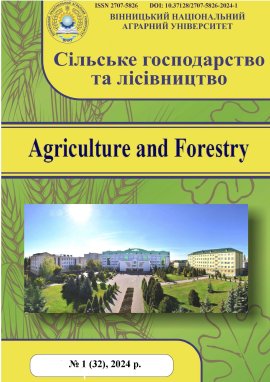
Issue №: 1 (32)
The issue of the magazine is dedicated to the improvement of technological methods of growing agricultural crops. A special role is given to the influence of leguminous crops on increasing soil fertility, leguminous breeding, ecology and environmental protection, methods of combating pests
ECONOMIC AND ENERGY ANALYSIS OF THE EFFICIENCY OF CHICKPEA CULTIVATION UNDER THE INFLUENCE OF BIOLOGICAL PRODUCTS AND HERBICIDES
Shcatula Yurii – Candidate of Agricultural Sciences, Associate of Professor of the department of agriculture, soil science and agrochemistry of Vinnytsia National Agrarian University (21008, Vinnytsia, Sonaychna St. 3, e-mail: shkatula@vsau.vin.ua).
Votyk Volodymyr – postgraduate student of the Department of Agriculture, Soil Science and Agrochemistry of Vinnytsia National Agrarian University (21008, Vinnytsia, Sonaychna St. 3, e-mail: Votyk_volodymyr@ukr.net).
The main components of the latest chickpea cultivation technologies are competitive varietal technology; development of effective regulations for the use of various types of biological products by treating chickpea seeds before sowing; development of weed control systems in chickpea agrocenoses with the achievement of economic benefits from the introduction of energy-intensive resources, etc. It was established that the cost of gross production in the variant where herbicides were used was 42720-44400 UAH, and in the areas where, in addition to herbicides, chickpea seeds were treated with microbiological preparations Rizobofit + Biopolycide (1 t + 100 ml/t), the cost of gross production was at the level of 53520-54720 UAH. The use of these products led to a significant increase in yields and a further reduction in grain costs. Depending on the treatment of seeds with biological preparations and the use of herbicides, the cost of 1 tonne of grain was in the range of UAH 6644-8127. The highest conditional net profit was recorded in the areas where chickpea seeds were treated with Rizobrfit inoculant and Biopolycid biofungicide before sowing and with Frontier Optima soil herbicide at a rate of 1.2 l/ha - UAH 39715, respectively, with a profitability level of 265%. Energy analysis of chickpea cultivation allows to develop and evaluate the effectiveness of resource and energy-saving technologies in agriculture and crop production, to use energy efficiently, and to prevent environmental pollution. Calculations have shown that the use of soil herbicides increases grain yields, which is accompanied by a higher energy input of 31.49-32.73 MJ/ha. The highest energy yield with chickpea harvest was determined in the variant where before sowing chickpea seeds were treated with microbiological preparations Rhizobophyt + Biopolycide (1 l/t + 100 ml/t), and before the emergence of the crop, the soil herbicide Frontier Optima, 72% c.e., 1.2 l/ha - 40.33 GJ/ha was applied. The use of this composition of preparations in chickpea crops proved to be the most energy-efficient, as the gross energy of the crop increased by 30.6 GJ/ha compared to control I, with an energy efficiency coefficient of 2.44, and is approaching the energy-saving technology of chickpea cultivation. The values of the energy efficiency coefficient indicate a high energy efficiency of chickpea cultivation using biological products and herbicides in the conditions of the Right-Bank Forest-Steppe of Ukraine.
1. Mazur V.A., Honcharuk I.V., Pantsyreva H.V., Telekalo N.V. (2020). Ahroekolohichne obgruntuvannia tekhnolohichnykh pryiomiv vyroshchuvannia zernobobovykh kultur [Agroecological substantiation of technological methods of growing leguminous crops]. Vinnytsia: TOV «TVORY». [in Ukrainian].
2. Shkatula Yu.M., Votyk V.O. (2020). Kontroliuvannia burianiv v ahrotsenozakh nutu. [Weed control in chickpea agrocenoses]. Silske hospodarstvo ta lisivnytstvo − Agriculture and forestry. № 4 (19). 135-147. DOI: 10.37128/2707-5826-2020-4-12 [in Ukrainian].
3. Shkatula Yu.M., Votyk V.O. (2022). Vplyv herbitsydiv i biolohichnykh preparativ na rostovi protsesy ta zernovu produktyvnist nutu [Іnfluence of herbicides and biological products on growth processes and grain productivity of chickpea]. Silske hospodarstvo ta lisivnytstvo - Agriculture and forestry. № 2 (25). 184-197. DOI: 10.37128/2707-5826-2020-4-12 [in Ukrainian].
4. Shkatula Yu.M., Votyk V.O. (2023). Fenolohichni sposterezhennia za fazamy rostu i rozvytku sortiv nutu. [Phenological observations of the phases of growth and development of chickpe avarieties]. Naukovi dopovidi NUBiP Ukrainy − Scientific reports of NUBiP of Ukraine. № 1 (101). 15. DOI: http://dx.doi.org/ 10.31548/ dopovidi1(101).2023.007. [in Ukrainian].
5. Frias J., Vidal-Valverde C., Sotomayor S., Diaz-Pollan C., Urbano G. (2000). Influence of processing on available carbohydrate content and antinutritional factors of chickpeas. European food research and technology. Vol. 210. P. 340-345. DOI:http://doi.org/ 10.1007/s002170050560 [in English].
6. Didovych S.V. (2005). Pidvyshchennia produktyvnosti nutu shliakhom nitranizatsii nasinnia. [Increasing the productivity of chickpea by nitranisation of seeds]. Naukovi pratsi Krymskoho derzhavnoho ahrotekhnolohichnoho universytetu – Scientific works of the Crimean State Agrotechnological University. Simferopol, № 91. 25-31. [in Ukrainian].
7. Kovalenko O.A. (2023). Udoskonalennia elementiv tekhnolohii vyroshchuvannia nutu v umovakh zroshennia. [Improvement of elements of chickpea cultivation technology under irrigation conditions of the Southern Steppe of Ukraine]. Silske hospodarstvo ta lisivnytstvo - Agriculture and forestry. № 3 (30). 201-210. DOI: 10.37128/2707-5826-2023-3-15 [in Ukrainian].
8. Vyroshchuvannia nutu prynese €1600 z hektara [Growing chickpeas will bring €1600 per hectare]. URL: https://agroreview.com/news/vyroshchuvannya-nutu-prynese-€1600-z-hektara (data zvernennia: 19.01.2024).
9. Lavrenko N.M. (2014). Efektyvnist vykorystannia vody posivamy nutu zalezhno vid tekhnolohichnykh pryiomiv yoho vyroshchuvannia za riznykh umov zvolozhennia [The efficiency of water use by chickpea crops depending on the technological methods of its cultivation under different conditions of moisture. Fodder and fodder production]. Kormy i kormovyrobnytstvo− Fodder and fodder production. Issue 79. P. 190–195. [in Ukrainian].
10. Didovych S.V. (2007). Formuvannia ta funktsionuvannia symbiozu Mesorhizobium ciceri – Cicer arietinum v ahrotsenozakh pivdennoho Stepu Ukrainy: avtoref. dys. … kand. s.-h. nauk / Instytut silskohospodarskoi mikrobiolohii UAAN, Chernihiv [Formation and functioning of the symbiosis Mesorhizobium ciceri – Cicer arietinum in agrocenoses of the southern Steppe of Ukraine]. 18. [in Ukrainian].
11. Koloianidi N.O. (2019). Efektyvnist vyroshchuvannia sortiv nutu za riadkovoi ta shyrokoriadnoi sivby z vykorystanniam herbitsydiv [Efficiency of chickpea varieties cultivation under row and wide-row sowing with the use of herbicides]. Tavrijskyj naukovyj visnyk. Seriya: Silskogospodars`ki nauky – Taurian Scientific Herald. Series: Agricultural Sciences. Issue 109. 64-69. DOI: https://doi.org/10.32851/2226-0099.2019.109-1.10. [in Ukrainian].
12. Lohosha O.V., Khalep Yu.M., Vorobei Yu.O. (2020). Ekonomichna ta bioenerhetychna efektyvnist bakteryzatsii nutu shtamom MESORHIZOBIUM CICERI ND - 64 [Economic and bioenergy efficiency of chickpea bacterisation with MESORHIZOBIUM CICERI strain ND - 64]. Silskohospodarska mikrobiolohiia − Agricultura lmicrobiology. Issue 31. 64-71. DOI: https://doi.org/10.35868/1997-3004.31.64-71 [in Ukrainian].
13. Kovalenko O.A., Korkhova M.M., Tantsiura V.S. (2017). Ekonomichna efektyvnist vyroshchuvannia nutu zalezhno vid inokuliatsii ta obrobky nasinnia biofunhitsydom. Innovatsiinyi shliakh rozvytku ahrarnoho vyrobnytstva. [Economic efficiency of chickpea cultivation depending on inoculation and seed treatment with biofungicide]. Innovacijny`j shlyax rozvy`tku agrarnogo vy`robny`cztva. Zbirnyk materialiv Vseukrainskoi naukovo-praktychnoi Internet-konferentsii, 08 hrudnia 2017 r. Kherson : IZZ NAAN, 51-52. [in Ukrainian].
14. Burykyna S.I., Kryvenko A.I., Parlikokoshko M.S. (2022). Pohodni umovy yak faktor vplyvu na formuvannia produktyvnosti ta yakosti zerna nutu [Weather conditions as a factor influencing the formation of productivity and quality of chickpea grain]. Tavrijskyj naukovyj visnyk. Seriya: Silskogospodars`ki nauky – Taurian Scientific Herald. Series: Agricultural Sciences. № 123. P. 22-32. DOI: https://doi.org/10.32851/2226-0099.2022.123.4. [in Ukrainian].
15. Korobko O.O. (2019). Biolohichne obgruntuvannia zastosuvannia herbitsydu, rehuliatora rostu roslyn i mikrobnoho preparatu u posivakh nutu v umovakh Pravoberezhnoho Lisostepu Ukrainy : dys. …k. s.-h. nauk : 03.00.12 / Umanskyi nats. un-t sadivnytstva. Uman [Biological substantiation of the use of herbicide, plant growth regulator and microbial preparation in chickpea crops in the conditions of the Right-Bank Forest-Steppe of Ukraine: Candidate of Agricultural Sciences: 03.00.12 / Uman National University of Horticulture. Uman]. [in Ukrainian].
16. Horishkin M.V., Usatenko Yu.I., Brahin V.M. (2008). Osnovy bioenerhetychnoho analizu [Fundamentals of bioenergy analysis]. Luhansk: Elton-2, 47. [in Ukrainian].
17. Mazorenko D.I., Mazniev H.Ie. (2006). Tekhnolohichni karty ta vytraty na vyroshchuvannia silskohospodarskykh kultur z riznym resursnym zabezpechenniam. [Technological maps and costs of growing crops with different resource provision]. Kharkiv : KhNTUSH, 72. [in Ukrainian].
18. Ushkarenko V.O., Lazer P.N., Ostapenko A.I., Boiko I.O. (1997). Metodyka otsinky bioenerhetychnoi efektyvnosti tekhnolohii vyrobnytstva silskohospodarskykh kultur. [Methods for assessing the bioenergy efficiency of crop production technologies]. Kherson, 21. [in Ukrainian].
About the journal
Cluster Agricultural and veterinary sciences (H1 Agronomy, H4 Forestry)
Name of the publication «AGRICULTURE AND FORESTRY»
The aim of the journal "Agriculture and Forestry" is to highlight the results of fundamental and applied research in the fields of agriculture and forestry, aimed at improving the efficiency of agricultural production and introducing modern technologies into farming practice.
This goal defines the main objectives:
– to ensure the creation of open information access regarding the dissemination of relevant scientific research results to: lecturers of agricultural higher education institutions, postgraduate students, doctoral candidates, research staff, and agricultural production specialists;
– to promote the development of young scientists in agricultural sciences;
– to enhance communication between experienced researchers and young scientists in agronomy and forestry;
– to facilitate the expansion of ties between Vinnytsia National Agrarian University and domestic and foreign educational institutions, scientific establishments, and their academic communities.
The scientific, production, and educational journal "Agriculture and Forestry" is a peer-reviewed open-access publication that publishes original experimental research, theoretical and practice-oriented articles within the cluster of "Agricultural and Veterinary Sciences".
The journal's subject matter covers such areas as agronomy and forestry. Publications of scientific and practical significance address the experimental foundations of agricultural and forestry sector development, innovative production technologies, and the results of fundamental and applied research aimed at increasing productivity, product quality, and the sustainable development of natural and production systems.
Publisher: Vinnytsia National Agrarian University
EDRPOU code: 00497236
Publisher's ROR:05m3ysc06
Prefix DOI: 10.37128/
Frequency is quarterly
Publication languages: (Ukrainian, English)
Media ID R30-05174.
Editor in Chief Ihor Didur
According to the order of the Ministry of Education and Science of Ukraine dated 17.03.2020 № 409. The journal Agriculture and Forestry is included in the List of scientific professional publications of Ukraine Category "B" in agricultural sciences (specialties) - 101, 201, 202, 203, 205, 206.
State registration: Decision of the National Council of Ukraine on Television and Radio Broadcasting No. 1337 and No. 1181. Media identifier – R30-05174.
Scientific journal "AGRICULTURE AND FORESTRY" was founded in 1995; it was entitled as Bulletin of Vinnytsya State Agricultural Institute.
In 2010-2014 was enritled as Collection of scientific works of Vinnytsia National Agrarian University.
It has been named as Agriculture and Forestry since 2015.
Listed in the updated list of scientific professional editions of Ukraine on agricultural sciences under the name Agriculture and Forestry (Order of the Ministry of Education and Science of Ukraine of May 16, 2016; No. 515).
Since 2015, "Agriculture and Forestry". (archive of previous issues for 2015-2019) at http://forestry.vsau.edu.ua/.
The journal “Agriculture and Forestry (ISSN: 2707-5826)” passed the evaluation process of Index Copernicus positively and is indexed in the database of ICI Journals Master List ICV for 2018, 2019, 2020, 2021, 2022, 2023, 2024 is presented in the full list of indexed journals in the Master List International List
ICI Journals Master List Value
